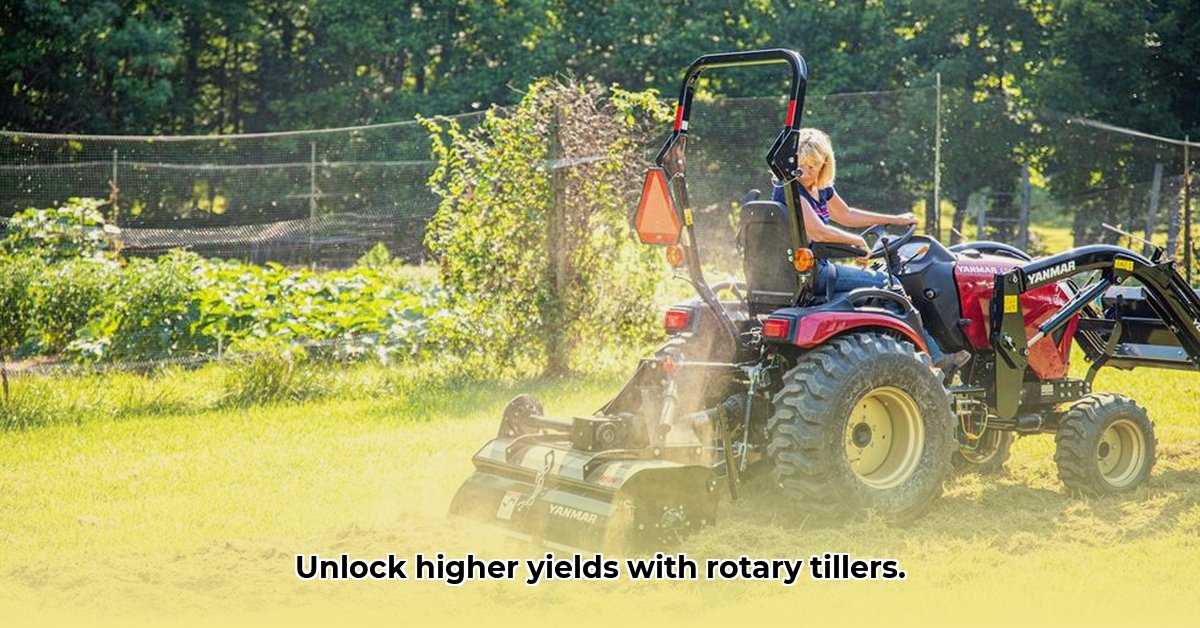
Rotary Tillers for Tractors: A Comprehensive Guide
Rotary tillers are powerful tools that can dramatically improve soil health and increase crop yields. However, understanding their proper use and limitations is crucial for sustainable agricultural practices. This guide provides actionable steps to maximize the benefits of rotary tillers while minimizing potential negative impacts. For more information on tractor tiller attachments, check out this helpful resource: Tractor Tiller Attachments.
Picking the Perfect Rotary Tiller: Matching Machine to Needs
Selecting the right rotary tiller involves careful consideration of several factors:
Tractor Horsepower: Ensure your tractor has sufficient horsepower to handle the tiller without strain. Consult your tractor's manual for recommended tiller sizes. Underpowering can lead to inefficient operation and potential damage to your tractor.
Soil Type: Heavy clay soils require tillers with robust, aggressive blades to break up the soil structure. Lighter, sandier soils benefit from gentler tillers to prevent excessive disruption.
Tilling Depth: Depth affects water retention and root development. Deeper tilling may benefit crops with deep root systems, but excessive depth can harm soil structure. Consider your crop's root depth requirements.
Tiller Width: Wider tillers cover more ground per pass, boosting efficiency, but require more powerful tractors. Balance efficiency with your tractor's capabilities.
Rotary Tillers vs. No-Till Farming: A Comparative Analysis
The decision between rotary tilling and no-till farming requires a thorough evaluation of the advantages and disadvantages of each method. There is no universally "better" option; the choice depends on your specific farming context and goals.
Rotary Tilling Advantages:
- Excellent Seedbed Preparation: Creates a fine, smooth seedbed ideal for planting.
- Effective Weed Control: Buries weed seeds and helps control existing weeds.
- Organic Matter Incorporation: Efficiently mixes organic matter into the soil, enhancing nutrient levels and structure.
- Relatively Low Initial Cost: Generally less expensive upfront than no-till equipment.
Rotary Tilling Disadvantages:
- Soil Structure Disruption: Can break down soil structure, reducing water infiltration and increasing erosion. This can lead to topsoil loss and water runoff.
- Harmful to Soil Biota: Intense tilling can damage beneficial soil organisms and disrupt nutrient cycling.
- Long-Term Organic Matter Depletion: Repeated tilling, despite initial benefits, can decrease overall organic matter over time.
- Higher Fuel Consumption: Typically uses more fuel than no-till methods.
No-Till Farming Advantages:
- Enhanced Soil Health: Builds soil health, increasing organic matter and improving water retention. This creates a more resilient and productive soil ecosystem.
- Reduced Erosion: Crop residue protects soil from wind and water erosion, preserving topsoil and reducing nutrient loss. Studies show that no-till reduces erosion by up to 90% compared to conventional tillage.
- Time and Fuel Savings: Fewer passes across the field translate into significant savings in time and fuel costs.
- Increased Biodiversity: Supports a wider range of beneficial soil organisms and plants.
No-Till Farming Disadvantages:
- Specialized Equipment Required: Often necessitates specialized equipment (no-till drills), representing a higher upfront investment.
- Weed Management Challenges: Weed control might be more complex, potentially requiring careful planning and use of herbicides or cover crops.
- Steeper Learning Curve: Transitioning to no-till farming requires adaptation of farming practices and techniques.
Tilling Smarter, Not Harder: Sustainable Rotary Tilling Practices
Even with rotary tillers, sustainable approaches can minimize negative impacts:
Shallow Tilling: Reduce tilling depth to minimize soil disruption and preserve soil structure. Shallow tillage is often more effective for weed control in many situations.
Utilize Cover Crops: Planting cover crops protects the soil, improves its structure, and suppresses weeds. Cover crops significantly improve soil health.
Explore Conservation Tillage: Consider alternative techniques like strip-till or ridge-till to reduce soil disturbance.
Regular Soil Health Monitoring: Regularly assess soil health through testing and observation to gauge the impact of tillage practices. This allows for adaptive management strategies.
Implement Crop Rotation: Rotating crops helps reduce pest and disease build-up and improves soil health.
Rotary Tiller Anatomy and Informed Purchasing
Understanding a rotary tiller's components is crucial for making informed purchases.
Tine Design and Material: Strong, durable tines are essential for longevity and effective tilling. Choose tines appropriate for your soil type.
Gearbox and Drive System: A robust gearbox and drive system ensure reliable operation and a longer lifespan.
Depth Control: Adjustable depth control allows precise tillage to suit different soil conditions and crops.
The Long-Term View: Sustainable Farming and Your Future
Sustainable agriculture prioritizes long-term soil health. While rotary tillers offer immediate benefits, their long-term consequences necessitate careful consideration. Weigh the short-term advantages against the potential long-term impacts on soil health. No-till practices often offer better long-term results for soil quality and overall farm sustainability. Continuous adaptation based on monitoring and assessment is key.
Mitigating Soil Erosion from Rotary Tilling in Arid Climates
Soil erosion is a major concern in arid climates. Proper rotary tilling practices are crucial for minimizing this risk.
Key Strategies:
Maximize Crop Residue: Maintain at least 30% surface residue cover to protect soil from wind and water erosion.
Appropriate Tiller Selection: Choose a tiller suited to your soil type, avoiding excessive pulverization of loose soils.
Precise Tillage Timing: Avoid tilling when soil is very dry. Till when soil moisture is optimal.
Consider No-Till or Alternative Practices: Explore no-till or conservation tillage techniques in arid locations where appropriate.
Integrate Water Management Practices: Implement techniques like contour farming or terracing to minimize water runoff.
Continuous Monitoring and Adjustment: Regularly monitor soil conditions and adjust tillage practices as needed.
By adopting these practices, you can significantly improve the sustainability of your farming operations, increase yields, and ensure the long-term viability of your land. Remember, informed decision-making and adaptable strategies are crucial for success in all agricultural endeavors.